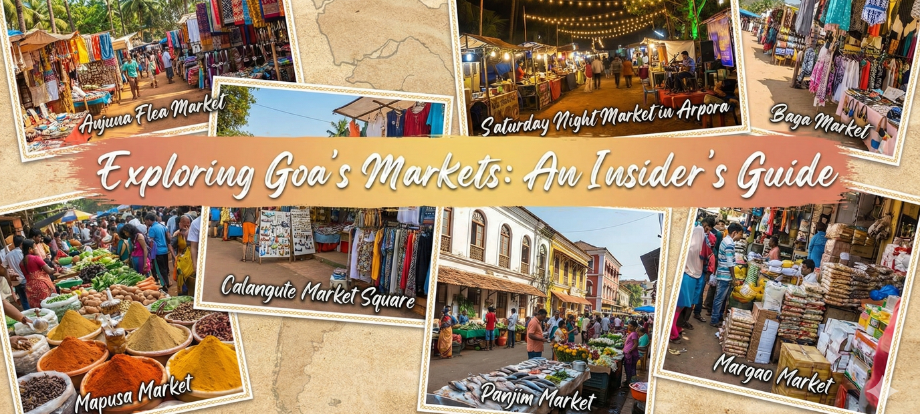
Goa, India’s beach paradise, is famous not only for its sun-kissed shores but also for its vibrant, eclectic markets. The markets of Goa are a melting pot of cultures, where local artisans and international tourists come together to celebrate art, culture, and the spirit of Goan lifestyle. From handicrafts to antiques, spices to souvenirs, these markets provide a unique shopping experience for anyone looking to explore beyond the beaches. In this blog we Exploring Goa’s Markets.
Why Exploring Goa’s Markets?
1. Anjuna Flea Market
What to Buy: Here, you’ll find handmade jewelry, leather products, souvenirs, Tibetan and Kashmiri goods, and unique art pieces that represent the bohemian spirit of Goa.
2. Mapusa Market
What to Buy: Traditional Goan items, fresh produce, local spices, dried fish, Goan sausages (chorizo), and homemade pickles. If you’re looking for a true taste of Goan culture, this is the place.
3. Calangute Market Square
What to Buy: Sarongs, beachwear, shell jewelry, trinkets, and souvenirs are all widely available. The market also has shops that sell colorful hammocks, wooden carvings, and artifacts.
4. Saturday Night Market in Arpora
What to Buy: Everything from designer fashion to organic food, local handicrafts, leather products, and unique jewelry. The market also has stalls selling exotic spices and teas.
5. Panjim Market
What to Buy: Local Goan spices, cashew nuts (a Goan specialty), Goan feni (a local spirit made from cashews or coconuts), and traditional Goan sweets.
6. Margao Market
What to Buy: Fish, fresh fruits and vegetables, dried seafood, local spices, and Goan handicrafts. The market also has shops selling traditional Goan pottery and handcrafted items.
7. Baga Market
What to Buy: Boho-inspired clothing, accessories, and souvenirs. You’ll find colorful clothing stalls alongside food vendors, making it a fun place to visit in the evening.
Essential Tips for Shopping in Markets of Goa
-
Bargaining is Key: Bargaining is a common practice in Goan markets. Vendors expect it, so don’t hesitate to negotiate.
-
Bring Cash: Many small vendors do not accept credit or debit cards, so it’s best to bring cash.
-
Wear Comfortable Clothing: Some markets can be spread out, so comfortable clothing and shoes will make your shopping experience more enjoyable.
-
Respect Local Culture: Remember that many markets are frequented by locals, so it’s essential to be respectful and mindful of Goan culture.
-
Timing is Everything: Visiting in the morning allows you to enjoy the markets before they get too crowded, especially on weekends.
FAQs about Exploring Goa’s Markets
- Ans. The Anjuna Flea Market, Calangute Market Square, and Baga Market are popular spots for unique souvenirs in Goa.
2. When is the best time to visit Goa’s markets?
- Ans. The winter months, from November to February, are ideal, as the weather is pleasant and markets are fully operational during the tourist season.
3. Is bargaining accepted in Goan markets?
- Ans. Yes, bargaining is encouraged in Goan markets, especially at the flea markets and street stalls.
4. Are there any night markets in Goa?
- Ans. Yes, the Saturday Night Market in Arpora is a famous night market with live music, food, and unique shopping options.
Conclusion
Exploring Goa’s Markets is an unforgettable experience that adds another dimension to the beauty of this tropical paradise. Whether you’re seeking artisanal products, trying Goan spices, or hunting for a unique souvenir, each market offers something distinct. These markets give you a taste of local culture, allowing you to dive deeper into the soul of Goa.
For more information and to book luxury villas in Goa with private pools, visit Drakensberg Destinations. Make all your trip memorable one yet by choosing the perfect retreat with Drakensberg Destinations.
Call Us to book 8800221939
Recent Posts